
Britain's relationship with tea is vast and slightly strange. The country taxed it, traded it, smuggled it, blended it and built rituals around it. For centuries, almost none of the leaf was grown in British soil.
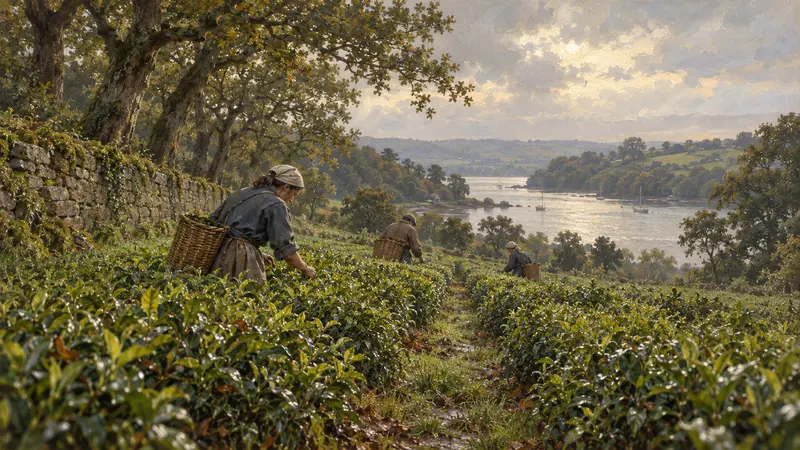
That changed on the banks of the River Fal in Cornwall. At Tregothnan, a private estate near Truro, tea bushes were planted in 1999. The first harvest in 2005 weighed just 28 grams. It was tiny, but it proved that commercially made English tea was possible.
Why Cornwall, not Kent or Yorkshire
Camellia sinensis is hardier than its tropical reputation suggests. Cold alone is not the problem. A productive tea garden needs a long growing season, reliable moisture, acidic soil, shelter from hard wind and protection from badly timed frost.
Cornwall's climate is moderated by the Atlantic. At Tregothnan, the Fal's deep tidal creeks carry mild, humid air inland. The tea ground sits away from direct salt wind and among old woods, garden walls and established shelter. Winter is cool but comparatively gentle; summer rarely becomes brutally hot.

The camellias that came first
Tregothnan had grown ornamental camellias for generations before anyone planted tea. The estate's old botanical collection demonstrated that members of the genus could survive outdoors in Cornish conditions. Tea is another camellia, cultivated for leaf rather than flower.
Head gardener Jonathon Jones studied tea cultivation and tested bushes in the walled kitchen garden. Early plants were battered by spring storms, but enough established themselves to justify expansion. The estate now plants across selected pockets of the wider property; it says only about 150 acres of its 1,000-acre core have the right combination of shelter and climate.
What English-grown really means
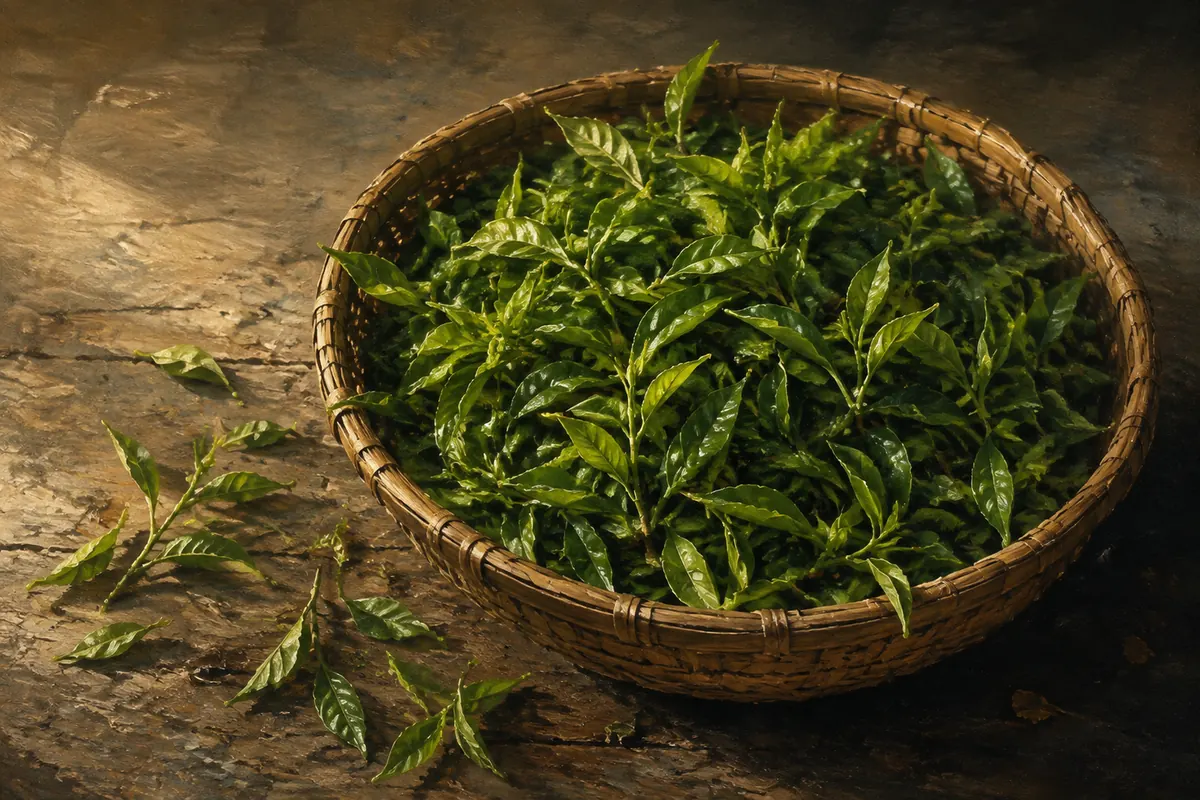
Much tea sold as English tea is a style of blend, historically built on strong imported black tea and intended for milk. English-grown tea means the leaf itself was cultivated in England. Those are completely different claims.
Tregothnan's early commercial product blended Cornish leaf with imported tea while the gardens were still small. The estate also produces single-estate lots made entirely from its own harvest. The distinction matters: local leaf is scarce and costly, so a clear label should tell you whether you are buying a British blend or tea grown wholly in Britain.
A young origin learning its own style
Ancient tea regions inherited cultivars and techniques refined over centuries. Cornwall had to learn by doing: which bushes tolerate wet winters, where spring growth escapes frost, when to pick and how to process a small, variable crop.
Black tea is the natural centre because oxidation and drying build body from cool-grown leaf. Green tea is also made, preserving more grass, herb and sea-air freshness. The best Cornish lots are not copies of Darjeeling or Assam. They tend to be clean, brisk and aromatic, with red-fruit, hedgerow, honey or light woody notes depending on harvest and manufacture.
How to brew Cornish tea
Because production includes several styles, the packet's guidance should lead. For a whole-leaf Cornish black tea, begin here:
- Leaf: 3 g per 250 ml.
- Water: 90–95 °C / 194–203 °F.
- Time: 3–4 minutes.
- Milk: optional; taste the first cup without it.
For green tea, lower the water to 75–80 °C and start at two minutes. Cornish leaf is rare enough that boiling it into bitterness rather defeats the point.

A river changes the meaning of English tea
The Fal is a drowned river valley, more estuary than rushing stream at Tregothnan. Its water moves with the tide and its influence arrives as humidity, mist and winter warmth. Tea rows sit among oaks, magnolias and old stone rather than beneath Himalayan ridges.
That landscape makes English tea literal. The story is no longer only about ships arriving with leaf from elsewhere. On a sheltered Cornish bank, Britain has begun the slower work of discovering what its own ground can make.
Frequently asked questions
Is tea really grown in England?
Yes. Tea has been grown commercially at Tregothnan Estate in Cornwall since the first bushes were planted in 1999. The first harvest followed in 2005, and the estate now makes black and green teas from English-grown leaf.
Why can tea grow in Cornwall?
Cornwall has a mild oceanic climate. At Tregothnan, the River Fal's tidal creeks bring humidity and comparatively warm winter air inland, while woods, slopes and old garden walls shelter tea bushes from salt wind and frost.
What was Britain's first homegrown tea harvest?
Tregothnan reports that its first harvest in 2005 produced just 28 grams. The quantity was tiny, but it demonstrated that tea could be cultivated and manufactured commercially in England.
Is all English tea grown in England?
No. English tea often means a British style of blend made from imported leaf. Fully English-grown tea should state clearly that the leaf itself was cultivated and processed in England.
What does Cornish tea taste like?
Style and harvest vary, but whole-leaf Cornish black tea can be brisk and aromatic with honey, hedgerow, red-fruit and light woody notes. Green versions are fresher and more herbal.
How should English-grown black tea be brewed?
Start with 3 g per 250 ml, water at 90–95 °C and a 3–4 minute steep. Taste it plain first. For English-grown green tea, use cooler water at about 75–80 °C and begin with two minutes.
