
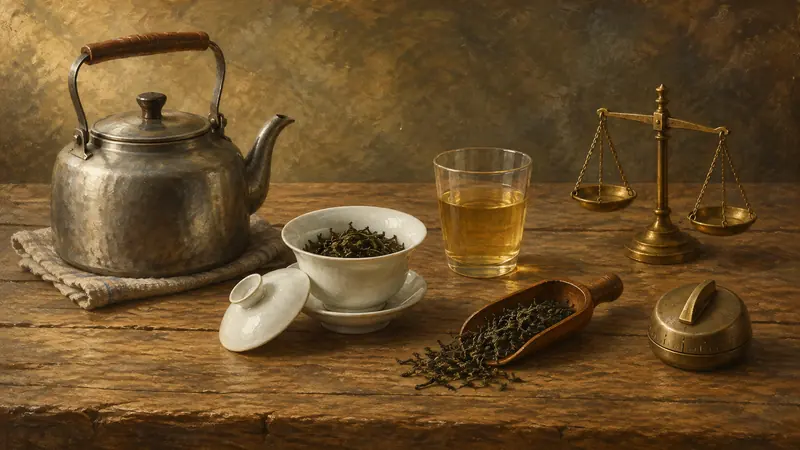
Most bad tea is not bad tea. It is good leaf brewed at the wrong temperature, for too long, in too little water, and then blamed for the result. Five variables decide what ends up in the cup, and four of them cost nothing to fix.
This is the practical version: what to change, in what order, and why each one matters.
The five variables
Every brewing instruction ever written is some combination of these:
| Variable | What it controls | If you get it wrong |
|---|---|---|
| Water quality | Which compounds dissolve at all | Flat, dull, or a grey film on the surface |
| Temperature | How fast tannins extract | Bitter (too hot) or thin and sour (too cool) |
| Leaf ratio | Strength and body | Watery, or harsh and over-concentrated |
| Time | Balance of sweetness against astringency | Bitter, drying, metallic |
| Vessel | Whether the leaf can move and open | Under-extracted despite correct everything else |
They interact. A cooler brew tolerates a longer steep. More leaf demands a shorter one. There is no single correct number for any tea — only a correct combination.

Water: the ingredient people forget
Tea is roughly 99 per cent water. It is the largest ingredient by a wide margin, and the one almost nobody adjusts.
Hard water — high in calcium and magnesium — suppresses aromatic compounds and reacts with tea polyphenols to leave the dull film you sometimes see on the surface of a cup. Distilled or heavily softened water swings the other way: with no dissolved minerals at all, the liquor tastes hollow and strangely flat. A moderate mineral content sits in between and is what you want.
Two rules that are free:
- Use fresh water. Water reboiled several times has lost dissolved oxygen, and the cup tastes noticeably duller for it.
- If your tap water tastes of chlorine, your tea will too. A simple carbon filter jug fixes this completely.
Temperature, by tea type
Heat is the accelerator. Higher temperature pulls out catechins and caffeine faster, and those are the bitter, astringent compounds. Delicate teas need less of it; robust, fully oxidised and fermented teas need all of it.
| Tea | Temperature | Time | Leaf per 250 ml |
|---|---|---|---|
| White | 80–85 °C / 175–185 °F | 3–5 min | 3–4 g |
| Green (Chinese) | 75–80 °C / 165–175 °F | 2–3 min | 2–3 g |
| Green (Japanese) | 65–75 °C / 150–165 °F | 1–2 min | 3–4 g |
| Yellow | 75–85 °C / 165–185 °F | 2–3 min | 3 g |
| Oolong (green style) | 85–95 °C / 185–205 °F | 2–3 min | 4–5 g |
| Oolong (roasted) | 95–100 °C / 205–212 °F | 2–4 min | 4–5 g |
| Black | 95–100 °C / 205–212 °F | 3–4 min | 2.5–3 g |
| Dark / pu-erh | 100 °C / 212 °F | Rinse, then 20–40 s | 5–6 g |
No thermometer? Boil, then wait. In an open mug, freshly boiled water drops roughly 10 °C in the first minute and continues falling. Two minutes of standing gets you close to black-tea-to-oolong range; four to five gets you into green tea territory. A kettle with a temperature setting removes the guesswork, and is the single best piece of equipment you can buy.
Leaf: weigh it once, and you will stop guessing
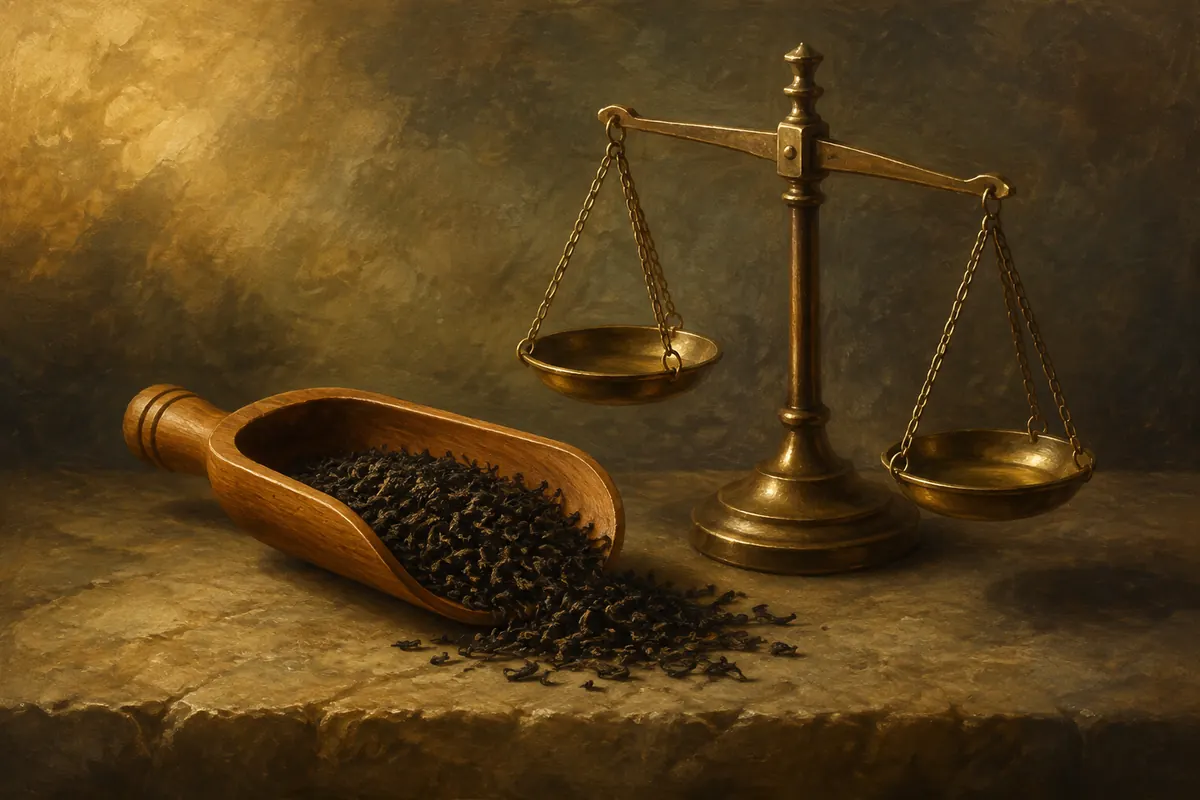
"One teaspoon per cup" is the most misleading instruction in tea. A teaspoon of dense rolled gunpowder green weighs around 4 g. A teaspoon of fluffy white peony weighs barely 1 g. Following the same instruction for both gives you two completely different drinks.
A cheap digital scale that reads to 0.1 g ends this permanently. Weigh your usual tea once, see what it looks like in the scoop, and you will be able to eyeball it forever afterwards.
The working baseline for Western brewing is 2.5–3 g per 250 ml, adjusted up for large, light leaf and down for dense or broken leaf.
Time, and the steep you are probably skipping
Extraction is not linear. Sweet, aromatic compounds and caffeine come out early. Tannins — the drying, astringent ones — come out steadily and keep coming. Beyond a certain point you are not making the tea stronger, only more bitter.
This is why a timer beats instinct. Thirty seconds is a meaningful difference in a green tea.
It is also why good loose leaf is worth re-steeping. Most quality whole-leaf teas give two or three cups, and oolongs and pu-erh give far more. The second steep is often the best one: the leaf has fully opened, and the harsher compounds went into the first cup. If your tea is genuinely finished after one brew, that tells you something about the tea.
Western brewing versus gongfu
There are two coherent approaches, and problems appear when people half-do both.
Western: little leaf, lots of water, long steep, one or two infusions. Around 3 g in 250 ml for three minutes. Convenient, forgiving, and what almost every packet instruction assumes.
Gongfu: lots of leaf, little water, very short steeps, many infusions. Around 5 g in 100 ml, starting at 10–20 seconds and adding a few seconds each round. It shows how a tea changes across a session, and it is where oolong and pu-erh come alive.
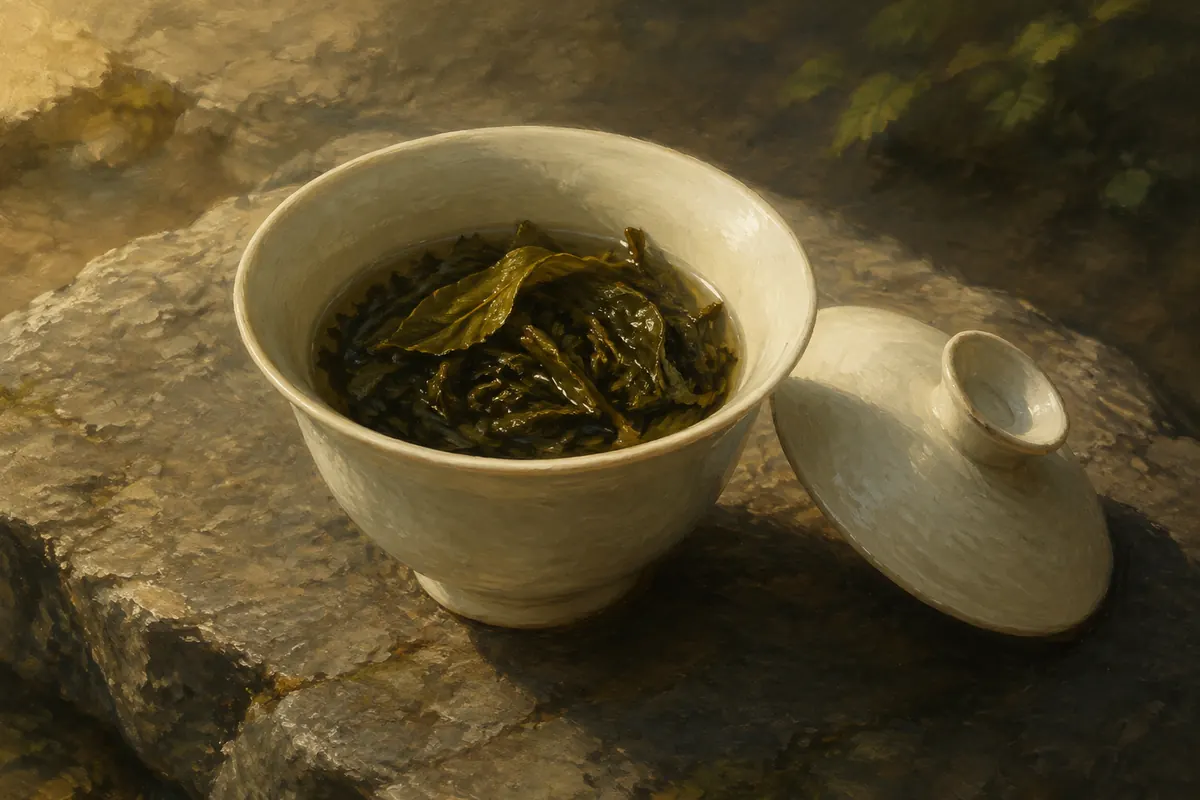
You do not need special equipment for gongfu. A small gaiwan or any 100–150 ml lidded vessel you can pour from will do.
Give the leaf room
Dry tea expands to several times its volume. A tight mesh ball keeps it compressed, so water flows around the clump instead of through it, and you get a weak, uneven brew from excellent leaf.
Anything that lets the leaf float freely works: a basket infuser that fills the width of the mug, a teapot with a wide internal strainer, or simply brewing loose in the vessel and pouring through a strainer. The last is what most serious drinkers do.
Fixing a bad cup
| Problem | Most likely cause | Fix |
|---|---|---|
| Bitter, drying | Too hot, or steeped too long | Drop 10 °C first; then cut 30 s |
| Weak but still bitter | Not enough leaf, compensated with time | More leaf, shorter steep |
| Thin and sour | Water too cool for that tea | Raise temperature |
| Flat, no aroma | Reboiled or heavily softened water | Fresh filtered water |
| Grey film on surface | Hard water | Filter the water |
| Uneven, cloudy | Leaf compressed in an infuser ball | Brew loose or use a wide basket |
| Stale, papery | Old or badly stored leaf | See our guide to buying loose leaf tea |
Change one variable at a time. Changing three at once tells you nothing about which one was the problem.
Frequently asked questions
What temperature should I brew tea at?
It depends on the type. Japanese green tea brews best at 65–75 °C, Chinese green at 75–80 °C, white at 80–85 °C, oolong at 85–100 °C depending on roast level, and black and dark teas at 95–100 °C. Higher temperatures extract bitter tannins faster, so delicate teas need cooler water.
How much loose leaf tea should I use per cup?
About 2.5–3 g per 250 ml for Western-style brewing. Avoid measuring by teaspoon: a teaspoon of dense rolled green tea can weigh four times as much as a teaspoon of fluffy white tea, so the same instruction gives very different results.
How long should tea steep?
Roughly 1–2 minutes for Japanese green, 2–3 minutes for Chinese green and oolong, 3–4 minutes for black, and 3–5 minutes for white. Dark teas such as pu-erh are usually rinsed briefly and then steeped for only 20–40 seconds at a time.
Can you re-steep loose leaf tea?
Yes. Most quality whole-leaf teas give two or three infusions, and oolong and pu-erh can give many more. The second steep is often the best, because the leaf has fully opened and the harshest compounds were extracted in the first cup.
Does water quality affect tea?
Considerably. Tea is about 99 per cent water. Hard water suppresses aroma and can leave a dull film on the surface; distilled water tastes hollow because there are no dissolved minerals at all. Fresh, moderately mineralised filtered water gives the best result.
Why is my tea bitter?
Almost always water that is too hot, a steep that ran too long, or both. Lower the temperature by 10 °C first and taste again; if it is still harsh, shorten the steep by 30 seconds. Change one variable at a time.
Is a tea ball infuser bad?
A small mesh ball compresses the leaf so water cannot circulate through it, which under-extracts the tea. Use a wide basket infuser that fills the mug, or brew the leaf loose and pour through a strainer.
