
The price of tea tells you almost nothing about its quality. A £40 tin can hold broken leaf from a commodity auction with a luxury label on the outside, and a modest packet from a careful importer can hold the best tea you have ever drunk.
What separates them is visible, once you know what to look at. This guide covers the four things that actually predict a good cup — leaf integrity, freshness, provenance and the honesty of the seller — and the marketing language that predicts nothing at all.
What you are actually paying for
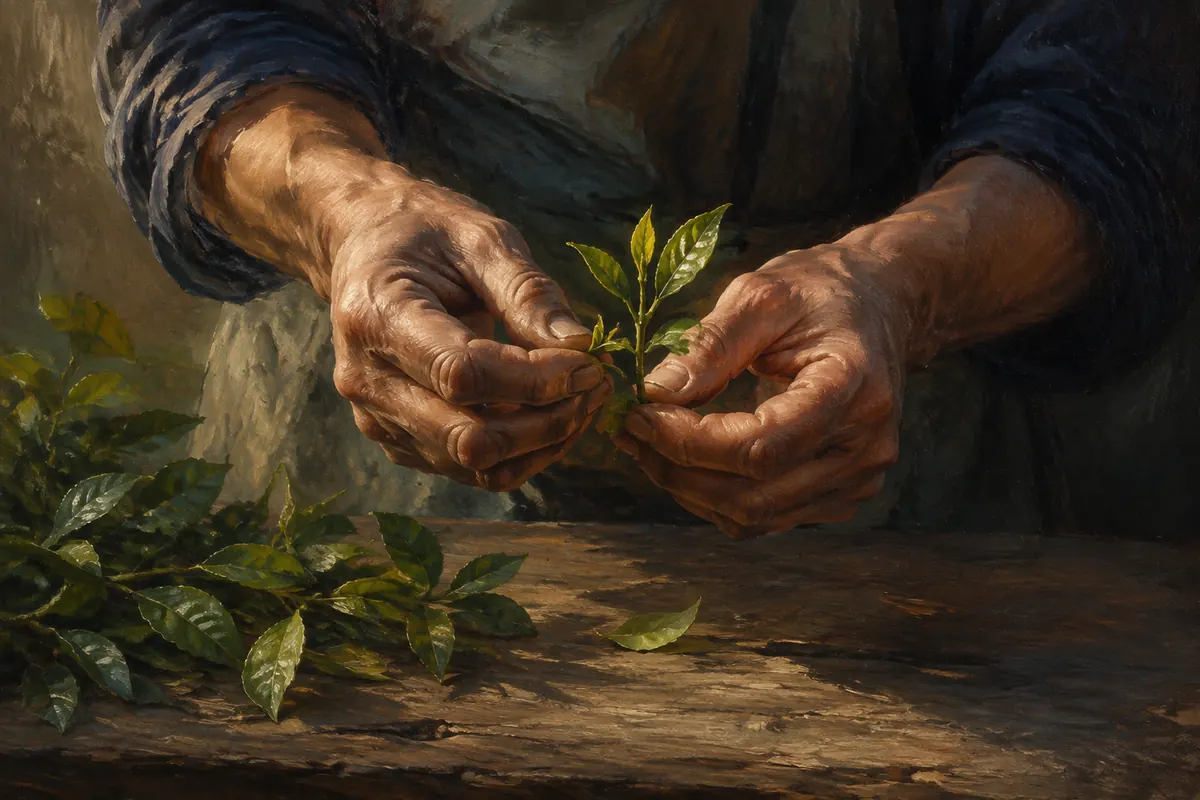
The cost of a tea is driven by how it was picked and how much of it exists. Fine tea is hand-plucked to a strict standard — often a bud and two leaves, sometimes buds only — by people walking the same rows every few days during a short window. Commodity tea is cut by machine, or by the CTC method, which shreds the leaf into uniform granules built for tea bags and fast, strong extraction.
Neither is dishonest. CTC does its job well. But a tea sold at a premium should show the picking standard that justifies it, and you can see that in the dry leaf.

Read the leaf
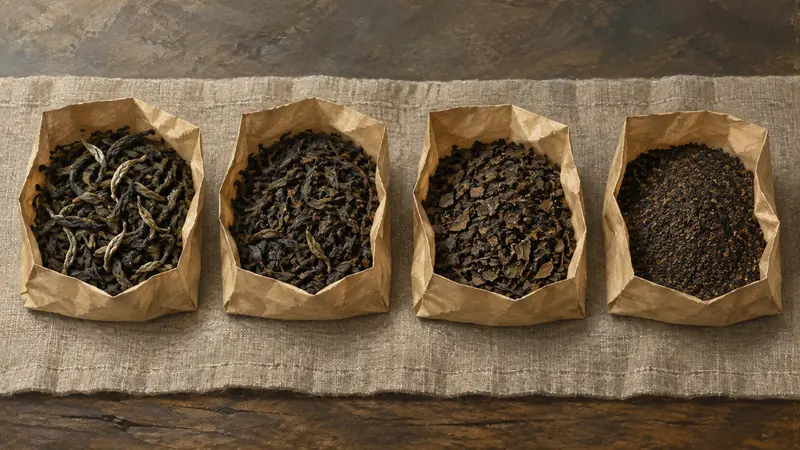
Open the packet and look before you brew. Four broad grades:
| Grade | What it looks like | In the cup |
|---|---|---|
| Whole leaf | Long twisted or rolled pieces; often visible buds and downy tips; unfolds into recognisable leaves | Nuanced, sweet, re-steeps well |
| Broken | Shorter fragments, still leaf-like | Faster, stronger, less complex; one good steep |
| Fannings | Small particles, like coarse sand | Strong, brisk, tannic; bag tea |
| Dust | Fine powder | Very fast, very astringent; cheapest bags |
Then check three things by hand:
- Colour. Live tea has depth — deep greens, glossy blacks, silver down on white tea buds. Dull, uniform grey-brown suggests age or heat damage.
- Smell. Put your nose in the packet. Good tea is immediately aromatic. Faint, dusty or papery means stale. A musty, wet-cardboard smell means moisture damage — the one fault worth returning a tea for. (Aged pu-erh is the exception: earthy is correct, musty is not.)
- Feel. Whole leaf should have some springiness. Leaf that crumbles to powder between your fingers has been over-dried or roughly handled.
Grade codes, and their limits
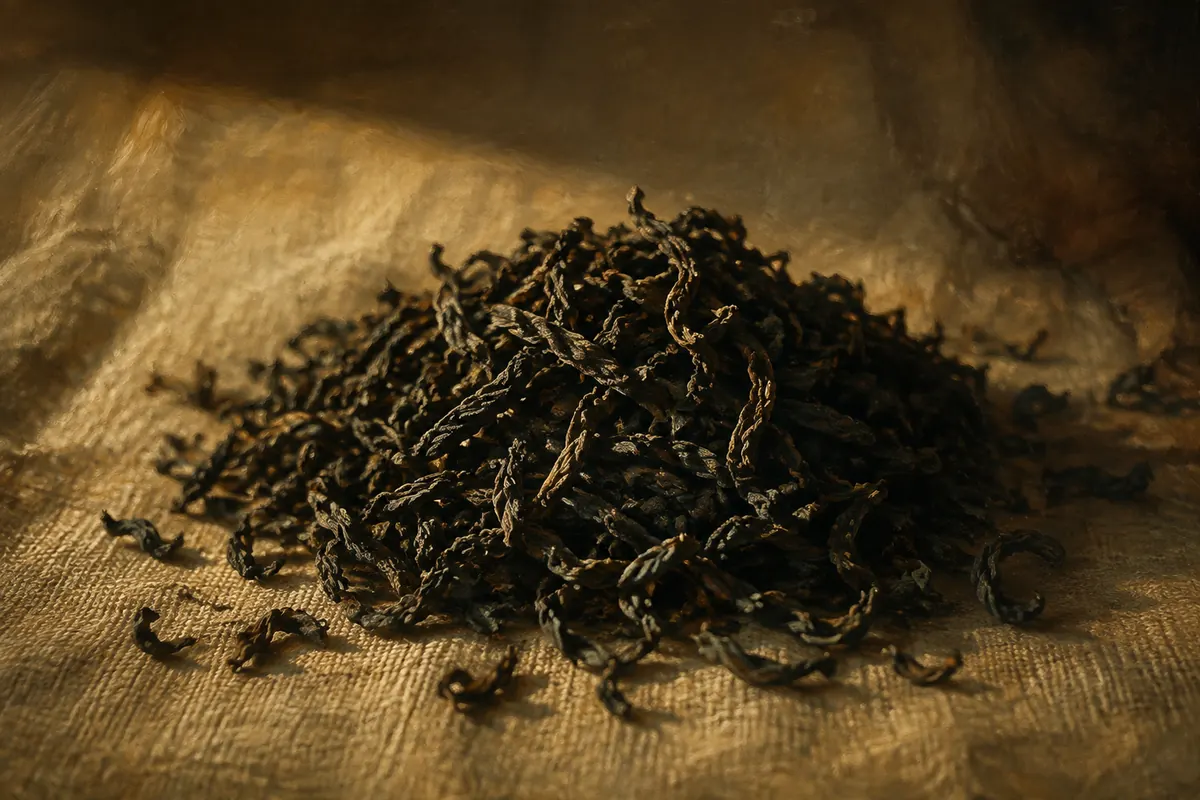
Black teas from India and Sri Lanka carry acronyms — OP, FOP, SFTGFOP and longer. They describe leaf size and bud content, not quality:
| Code | Means |
|---|---|
| OP | Orange Pekoe — whole leaf, no specific bud content. Nothing to do with oranges. |
| FOP | Flowery Orange Pekoe — contains buds (tips) |
| GFOP | Golden — the tips are golden in colour |
| TGFOP | Tippy — a high proportion of tips |
| FTGFOP | Finest |
| SFTGFOP | Super Finest — the top conventional grade |
| BOP | Broken Orange Pekoe — smaller pieces |
| CTC | Crush, Tear, Curl — machine-processed granules |
A long acronym means a high tip count. It does not mean the tea tastes good, and the codes are not independently audited. Chinese, Japanese and Taiwanese teas do not use this system at all; they are named by style, place and picking season instead — which is generally more useful.
Freshness: the date that matters
Tea does not spoil, but most of it fades. Aroma compounds are volatile, and green tea in particular loses its character within months.
Look for a harvest date, not a best-before date. A best-before two years out tells you when someone decided to stop guaranteeing it. A harvest date tells you what you are buying. A seller who lists the harvest season, and ideally the garden, is telling you they know their supply chain. One who lists neither may not.
| Tea | Drink within | Notes |
|---|---|---|
| Green, Japanese | 6 months | The most perishable of all; refrigerate sealed |
| Green, Chinese | 12 months | Spring picking is the one that matters |
| White | 1–2 years | Some styles improve slowly with age |
| Oolong, green style | 12–18 months | Refrigerate if you can |
| Oolong, roasted | 2–3 years | The roast protects it |
| Black | 2 years | Forgiving; first-flush Darjeeling is the exception — drink it young |
| Dark / pu-erh | Decades | The one category genuinely made to age |
Origin claims, and which ones carry weight
"Himalayan," "artisan," "hand-picked," "single-garden," "reserve" and "estate" are unregulated in most markets. Anyone may print them.
A small number of origin terms are legally protected. Darjeeling was India's first Geographical Indication, registered in 2004–05 and granted protected status in the European Union in 2011; only tea grown in the defined district may use the name. Uji, Longjing and Wuyi rock tea carry comparable protections in their own jurisdictions, with varying enforcement.
The specific claims that tend to correlate with quality are the checkable ones: a named garden or cooperative, a harvest season, an elevation, a cultivar. Vague claims correlate with nothing.
One honest caveat about our own category: blends are not lesser teas. A good blender builds consistency across harvests that a single garden cannot. But a blend should be sold as a blend. A "single-origin" tea that is available in unlimited quantity all year round is telling on itself.
What good tea actually costs
Useful arithmetic: at 3 g per cup, 100 g of tea makes about 33 cups — more if you re-steep, which good leaf lets you do.
| Per 100 g | Roughly per cup | What this buys |
|---|---|---|
| £5–10 | 15–30p | Solid everyday whole leaf |
| £10–25 | 30–75p | Good single-origin; most quality drinking lives here |
| £25–60 | 75p–£1.80 | Named garden, specific flush, small lot |
| £60+ | £1.80+ | Competition grade, rare picking — and where markup hides |
Excellent tea sits in the middle band far more often than the top one. Above roughly £60 per 100 g you are paying for scarcity, and scarcity and quality are not the same thing.

Buying signals, good and bad
Good signs: harvest dates on the listing; named gardens or regions; sample sizes of 10–25 g; specific brewing parameters rather than "add boiling water"; opaque, resealable packaging; a seller who will tell you when a tea is not for you.
Warning signs: no harvest date anywhere; clear plastic or glass display jars (light and air degrade tea quickly); health claims; the same "limited" tea available every month of the year; tasting notes so elaborate they describe nothing checkable.
Buy small first. A 20 g sample costs little and tells you more than any review. Once you find a seller whose descriptions match what arrives in the cup, most of the guesswork is over — then it is just a matter of brewing it properly.
Frequently asked questions
How can you tell if loose leaf tea is good quality?
Look at the dry leaf before brewing. Good tea shows whole or large pieces that unfold into recognisable leaves, has depth of colour rather than a uniform dull grey-brown, and smells clearly aromatic straight from the packet. Faint, dusty or musty smells indicate age or moisture damage.
What does Orange Pekoe mean?
Orange Pekoe (OP) is a leaf-size grade for black teas from India and Sri Lanka, meaning whole leaf without a specified bud content. It has nothing to do with oranges or with flavour. Longer codes such as SFTGFOP indicate a higher proportion of buds, not necessarily a better-tasting tea.
How long does loose leaf tea stay fresh?
Japanese green tea is best within about six months and Chinese green within a year. White tea and green-style oolong keep one to two years, roasted oolong and black tea two to three, and dark teas such as pu-erh are made to age for decades. Store tea sealed, opaque, cool and away from strong smells.
Should I look for a best-before date or a harvest date?
A harvest date. A best-before date only tells you when the seller stopped guaranteeing the tea. A harvest date tells you what you are actually buying, and a seller who publishes it is signalling that they know their supply chain.
How much should good loose leaf tea cost?
Most genuinely good single-origin tea sits between roughly £10 and £25 per 100 g, which works out at 30–75p per cup at 3 g per cup before re-steeping. Above about £60 per 100 g you are generally paying for scarcity rather than quality.
Is loose leaf tea better than tea bags?
Usually, because loose leaf is typically whole or large-piece leaf while most bags contain fannings or dust. Broken leaf extracts faster and more astringently and rarely re-steeps. Some pyramid bags do contain whole leaf, so the format matters less than the grade of leaf inside it.
Is Darjeeling tea a protected name?
Yes. Darjeeling was India's first registered Geographical Indication in 2004–05 and received protected status in the European Union in 2011. Only tea grown in the defined Darjeeling district may legally be sold under the name.
