
The Supsa is the longest river in Guria, a small region of western Georgia between the Meskheti mountains and the Black Sea. Georgia's tourism administration describes it as rising near Mepistskaro, the highest peak of the Meskheti Range, and running 108 kilometres to the coast.
Along the way it passes one of the places Georgians name as the beginning of their tea story. Guria later became part of one of the largest tea economies in the Soviet Union, then watched most of it disappear. Today the valley is better described by a quieter word: revival.
A short river with a long reach
The Supsa leaves forested mountains, crosses Chokhatauri and the humid Guria lowlands, and meets the sea near the village that shares its name. According to the Georgian National Tourism Administration, it is the longest and most powerful river in the region.
Western Georgia's tea country is a meeting of opposites in a small space: the warm, wet Black Sea coast on one side and high, cool mountains on the other. Tea grows here near the cold edge of its comfortable range, and that matters for both history and taste.
Goraberezhouli, on the left bank
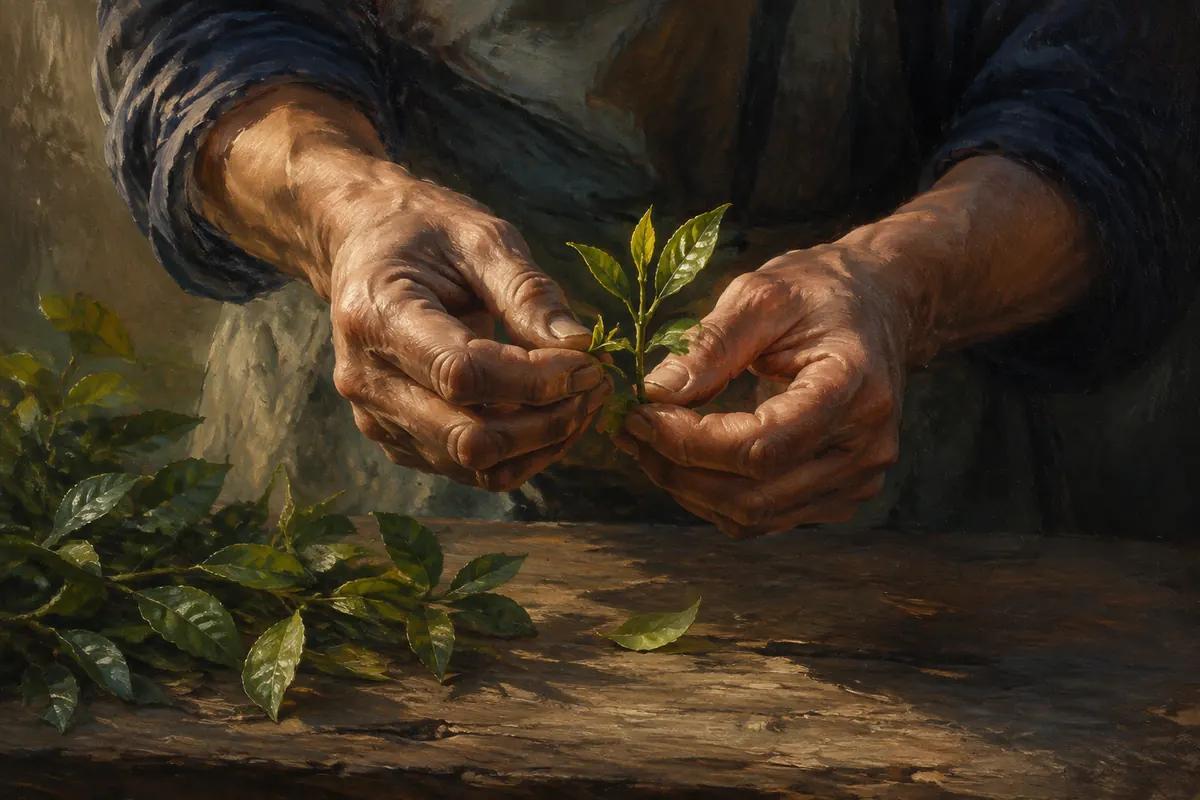
Above the Supsa valley in Chokhatauri Municipality stands Goraberezhouli, the historic estate of the Eristavi family. The national tourism site records that a tea-like product was first prepared there in 1840, in a primitive manner, on the estate of Mikheil Eristavi, and later shown at an agricultural exhibition in Saint Petersburg in 1864.
Accounts of Georgian tea's very first plantings differ, and other sources give later dates and other pioneers. What the estate offers is a fixed point on the river: proof that the Supsa valley was part of the experiment from the beginning, decades before tea became an industry.
From estate experiment to Soviet tea pantry
In the twentieth century, tea in western Georgia grew far beyond estate gardens. The ISET Policy Institute's value-chain study reports that the Georgian harvest peaked in 1985 at 152,000 tons, with nearly 180,000 people involved in some part of the value chain.
The same study notes that quotas came at the expense of quality between 1950 and 1990. Radio Free Europe/Radio Liberty describes mechanised harvesting and a product that, once the guaranteed Soviet market vanished, could not compete with inexpensive tea from Asia.
Collapse, and the bushes that stayed
After independence in 1991, the sector collapsed amid civil conflict and lost markets. ISET puts recent production at only about 1,800 tons, with roughly 11,000 hectares of plantations remaining and only 1,700 hectares operational at the time of the study.
The old bushes, however, did not all die. Many simply grew wild among ferns and scrub. That is the raw material of the revival: rows that can be cut back, cleared and brought into production rather than planted from nothing.
The revival in Guria
Georgia's state programme for tea plantations has run since 2016. At a recent meeting with the Ministry of Environmental Protection and Agriculture, the president of the Georgian Tea Producers Association said 2,050 hectares had been rehabilitated with state support, and that export remained the harder problem.
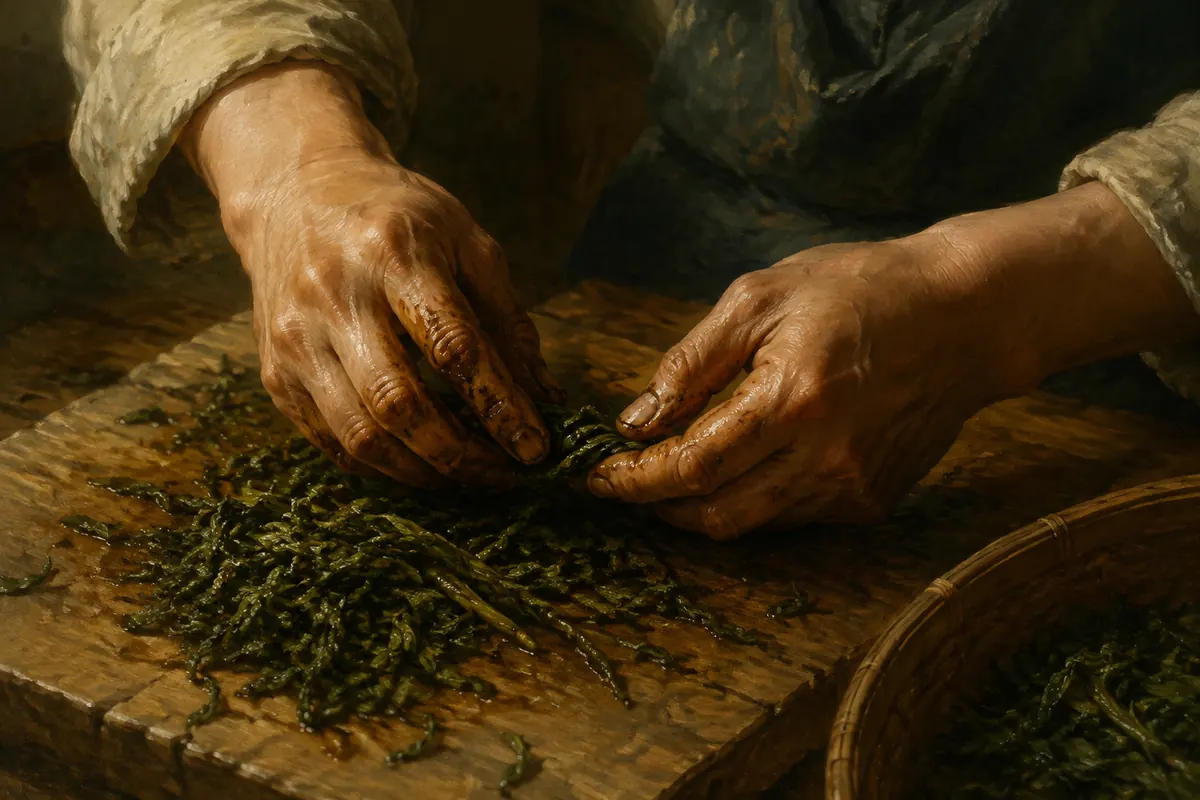
Much of the new energy is small in scale: families and cooperatives working old plantations, hand-picking where the Soviet system used machines, and making black and green teas in small batches. Guria, with its long tea history and surviving gardens, is one of the centres of that work.
What Guria tea tastes like
Western Georgia's cool nights and long winters slow the bushes' growth. Radio Free Europe/Radio Liberty connects that slow growth with the sweet, mellow character that once gave the region's best tea its reputation, and that small producers are trying to recover.
In practice, expect variation. A carefully made Guria black tea is usually gentle rather than forceful, with soft malt, dried fruit or honeyed notes. Green teas and teas from long-neglected bushes can be very different from one another. The producer and the year tell you more than the country name alone.
How to buy and brew it
Look for the region, the village or plantation, the producer and the harvest season. Teas sold simply as Georgian may be blends, and the sector has long exported leaf for blending. A named small maker in Guria is a more useful promise than a map outline on the box.
For a black tea, start with about 2.5 grams per 250 millilitres, freshly boiled water and three to four minutes. Taste before adding milk; gentle teas can disappear under it. If the cup feels thin, add leaf rather than time. Our brewing guide covers the variables in more detail.
What the Supsa contributes
The Supsa does not make every Guria tea taste alike. Its value is the same as any river in this Journal: it ties a cup to a real landscape. Here that landscape holds a nineteenth-century estate, a vast industrial past, overgrown rows and a new generation of growers clearing them by hand.
Follow the river down and it reaches the Black Sea. Follow it up and it climbs into the mountains that give Guria its cool nights. Georgian tea lives between those two ends, and its revival is being written along the way.
Frequently asked questions
Where is the Supsa River?
The Supsa is in Guria, western Georgia. Georgia's national tourism administration describes it as rising near Mepistskaro in the Meskheti Range and running 108 kilometres to the Black Sea.
What connects the Supsa to Georgian tea?
Goraberezhouli, the Eristavi family estate above the Supsa valley in Chokhatauri Municipality, is recorded by the national tourism site as the place where a tea-like product was first prepared in Georgia in 1840.
How much tea did Georgia produce at its peak?
The ISET Policy Institute reports a peak harvest of 152,000 tons in 1985, with nearly 180,000 people involved in the tea value chain.
Why did Georgian tea decline?
Soviet-era quotas favoured volume over quality, and after 1991 the sector lost its guaranteed market amid conflict and economic collapse. Production fell to a small fraction of its peak.
Is Georgian tea being revived?
Yes. A state rehabilitation programme has run since 2016, and the Georgian Tea Producers Association has said 2,050 hectares have been rehabilitated with state support. Many producers are small family farms and cooperatives.
What does Guria tea taste like?
Well-made Guria black tea is often gentle rather than forceful, with soft malt, dried fruit or honeyed notes. Cool nights and long winters slow the bushes' growth. Producer, plantation and year still change the cup.
