
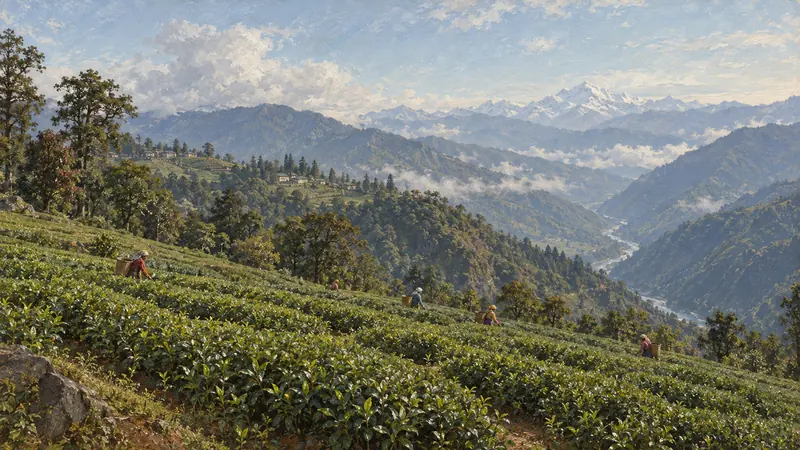
Sikkim is wedged between Nepal, Bhutan and Tibet, a steep Himalayan state drained by the Teesta and its largest tributary, the Rangit. Across the ridge to the south lies Darjeeling, one of the most crowded names in tea. Sikkim's answer is much smaller.
It has one principal estate. Temi occupies a high shoulder in Namchi district, looking over deep river valleys toward the snows. The garden covers 176.8 hectares and, because there is no second great Sikkim estate to confuse it with, Temi has become both a place and an origin.
A garden founded in 1969
The Government of Sikkim established Temi in 1969, before Sikkim joined India. Tea offered a high-value crop for a small state with little flat agricultural ground. The estate remains a public institution as well as a working garden, supporting hundreds of workers and a factory on the hill.
It is a young story beside China's ancient tea mountains or Darjeeling's nineteenth-century estates. That youth is part of Temi's clarity: one garden, one factory and a compact landscape rather than a regional name assembled from many producers.

What the Rangit valley does
The Rangit rises among glaciers and joins the Teesta near the southern end of Sikkim. Its tributaries cut steep, narrow valleys through the mountains. Temi stands above that drainage, with tea planted from roughly 1,400 to 2,000 metres.
Elevation slows growth and preserves aroma. River valleys pull mist through the folds of the land; bright mountain sun follows it. Nights remain cool. The bushes make small seasonal flushes rather than the continuous heavy growth of a tropical lowland garden.
Four harvests, four different teas
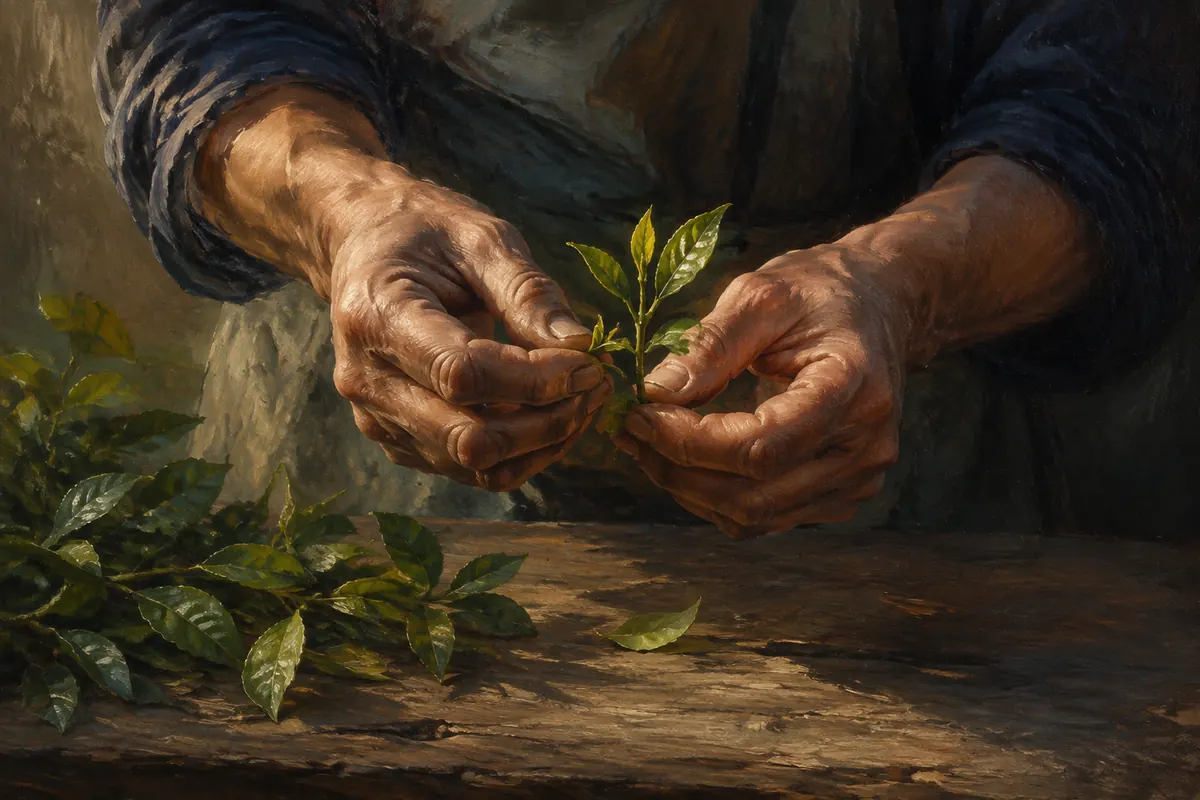
Temi describes four main seasons. Spring first flush, usually from late March into April, produces the palest and most aromatic tea. Summer second flush brings more body, fruit and copper to the cup. Monsoon leaf is stronger and more direct. Autumn returns to a softer fragrance with rounder sweetness.
The classic production is orthodox black tea: whole leaf with visible tips, rolled rather than cut into the granular CTC used for mass-market blends. The estate also makes green, white and oolong teas. Those styles are not side notes; they show how the same high-grown leaf changes when oxidation and heat are handled differently.
Organic by necessity and design
Temi received organic certification in 2008. Sikkim later became India's first fully organic state, but tea conversion came earlier. Organic management fits the isolation of the garden and its public role, though it also makes yield and pest control harder.
Certification is not a tasting note. It does not guarantee delicacy or careful manufacture. What it can guarantee is a documented growing standard. In a market crowded with vague Himalayan language, traceability is one of Temi's strongest qualities.
How Temi tastes and how to brew it
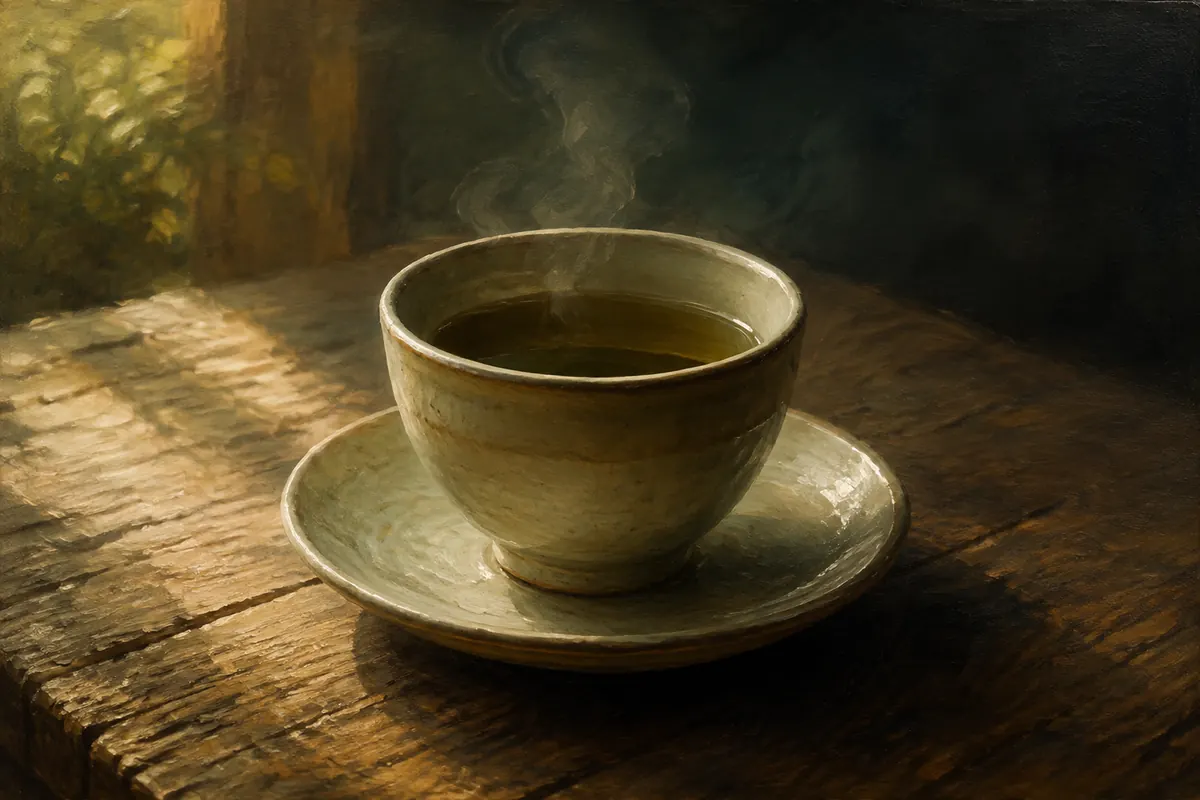
A good spring Temi can be light, floral and citrusy, with fresh hay and a clean mineral edge. Summer leaf is darker and more structured, moving toward stone fruit, muscatel and warm spice. Autumn is often rounded and gently woody. None needs milk, though a robust summer or monsoon lot can take it.
- Spring: 3 g per 250 ml, 85–90 °C, 2–3 minutes.
- Summer or autumn: 3 g per 250 ml, 90–95 °C, 3 minutes.
- Whole leaf: give it enough room to open; a basket infuser is better than a tea ball.
If a delicate first flush turns sharply bitter, shorten the time before lowering the leaf quantity. The aroma of high-grown tea is easiest to lose through over-brewing.
The advantage of being small
Temi will never produce tea at Assam's scale, and it cannot borrow Darjeeling's protected name. Its strength is the opposite: a finite garden with a legible history, overlooking the river system that shapes Sikkim.
In the cup, the Rangit is not a flavour. It is the cold valley air, the drainage, the mist and the steepness that made a tea garden possible on one Himalayan shoulder — and kept it small enough to remain itself.
Frequently asked questions
What is Temi tea?
Temi tea is tea grown and made at Temi Tea Estate in Namchi district, Sikkim, India. The estate is Sikkim's principal tea garden and produces orthodox black tea as well as smaller amounts of white, green and oolong tea.
When was Temi Tea Estate founded?
The Government of Sikkim established Temi Tea Estate in 1969. The garden covers 176.8 hectares on a high Himalayan slope above deep river valleys.
Is Temi tea organic?
Temi Tea Estate has been certified organic since 2008. Sikkim later became India's first fully organic state, but organic certification is a growing standard rather than a guarantee of flavour or leaf grade.
How is Sikkim tea different from Darjeeling tea?
The neighbouring regions share Himalayan elevation and seasonal flushes, but Sikkim tea is centred on one principal estate, Temi. It often has a floral, citrusy spring character and a fuller, fruitier summer cup, with unusually clear traceability.
What is the best season for Temi tea?
Spring first flush is the lightest and most fragrant, while summer second flush has more body, fruit and copper colour. Autumn is softer and rounder. The best choice depends on whether you prefer perfume, structure or mellow sweetness.
How should Temi black tea be brewed?
Use about 3 g per 250 ml. Brew spring tea at 85–90 °C for 2–3 minutes and stronger summer or autumn tea at 90–95 °C for about 3 minutes. Whole leaf needs enough space to open fully.
