
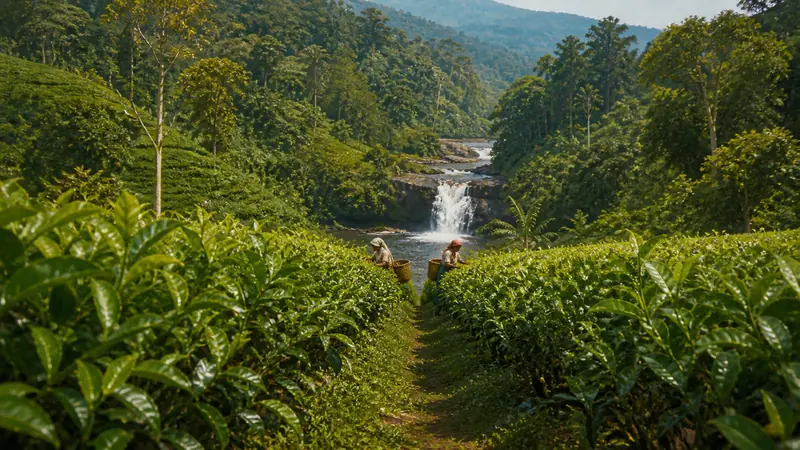
The Mahaweli Ganga is Sri Lanka's longest river. It rises in the central highlands near the island's tea heartland, curls north past Kandy, and empties into the sea at Trincomalee some 335 kilometres later. Its upper catchment — the wet, misted, steeply folded country between Hatton, Nuwara Eliya and Kandy — is where almost all of Sri Lanka's best tea grows.
None of it was supposed to be there. Until the 1870s this was coffee country.
The fungus that changed an island
Ceylon was one of the great coffee producers of the nineteenth century. Then, in 1869, a fungal disease called Hemileia vastatrix — coffee leaf rust — appeared on the island. Within two decades it had destroyed the crop almost entirely. Planters were ruined, estates were abandoned, and an entire colonial economy collapsed.
Two years before the blight arrived, a Scottish planter named James Taylor had put nineteen acres of tea into the ground at Loolecondera estate, near Kandy. It was an experiment. When coffee died, it became the template. By the end of the century Ceylon was a tea island, and it has been one ever since.
The commercial genius came slightly later. Thomas Lipton, already a successful grocer, bought Ceylon estates outright in 1890 and cut out the middlemen entirely — "direct from the tea garden to the teapot." He is the reason ordinary British households could afford tea, and the reason "Ceylon" became a household word rather than a place name.

Why elevation is the whole story
Sri Lanka classifies its tea by altitude, and the classification is not bureaucratic — the teas genuinely taste different.
| Band | Elevation | Character | Key districts |
|---|---|---|---|
| High-grown | Above 1,200 m | Pale, bright, delicate, floral; high aroma, lighter body | Nuwara Eliya, Dimbula, Uva |
| Mid-grown | 600–1,200 m | Balanced; rich colour, good strength, fruity | Kandy, Uda Pussellawa |
| Low-grown | Below 600 m | Dark, heavy, malty, strong; big leaf styles | Ruhuna, Sabaragamuwa |
Nuwara Eliya, the highest district at around 1,800 metres, produces the lightest and most fragrant Ceylon — so pale it can be mistaken for a green tea, and often described as the champagne of Ceylon teas.
Uva is the connoisseur's district and it owes its character to weather. From roughly June to September a hot, dry wind called the Kachchan blows across the eastern slopes. It stresses the bushes, slows growth, and produces a distinctive cooling, mentholic, wintergreen note found nowhere else in tea. Uva's seasonal quality window is one of the few genuine harvest-timing events in black tea outside Darjeeling.
Reading a Ceylon label
Sri Lanka runs one of the more rigorous origin systems in tea. The Lion logo issued by the Sri Lanka Tea Board certifies that the tea is entirely grown, processed and packed in Sri Lanka. Anything blended or packed elsewhere does not qualify, whatever the box says.
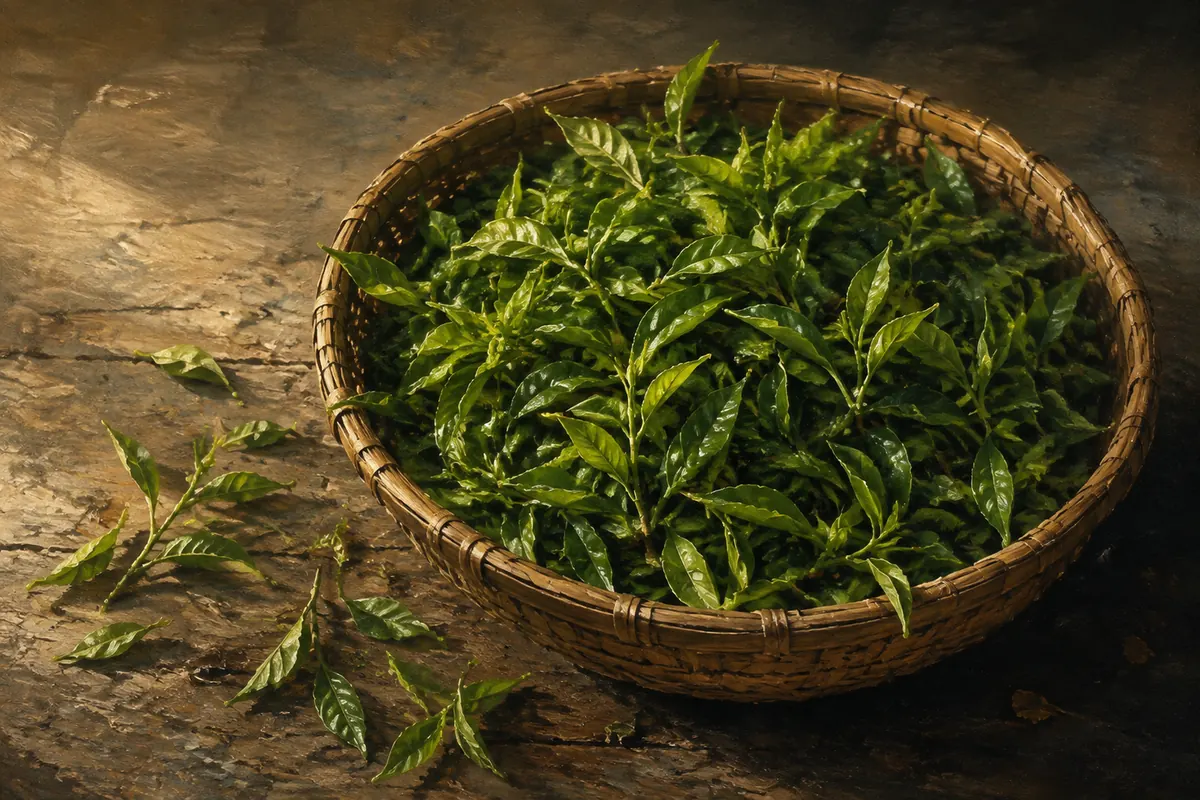
Beyond that, look for the district (Uva, Nuwara Eliya, Dimbula) rather than just the word Ceylon, and for a leaf grade. Common grades on high-quality Ceylon include:
- OP / OP1 — Orange Pekoe: long, wiry whole leaf.
- FBOP — Flowery Broken Orange Pekoe: broken leaf with tips, more body.
- BOP — Broken Orange Pekoe: the classic brisk Ceylon cup.
- Silver Tips / Golden Tips — rare bud-only specialities.
As with all tea grading, these describe leaf size and appearance, not quality. They still tell you a great deal about what will land in your cup.
The modern picture
Sri Lanka produced roughly 262,000 tonnes of tea in 2024, making it one of the top five producers and a top-three exporter. The industry is a cornerstone of the national economy and employs an enormous number of people, including the Hill Country Tamil communities whose ancestors were brought from South India to work the estates — a history with the same uncomfortable shape as Assam's.
It has also had a hard decade. A sudden nationwide ban on imported agrochemicals in 2021 hit yields severely before being reversed, and the wider economic crisis that followed disrupted everything from fertiliser supply to shipping. Production has been recovering, but the episode was a reminder of how exposed a single-crop export economy can be.
How to brew Ceylon
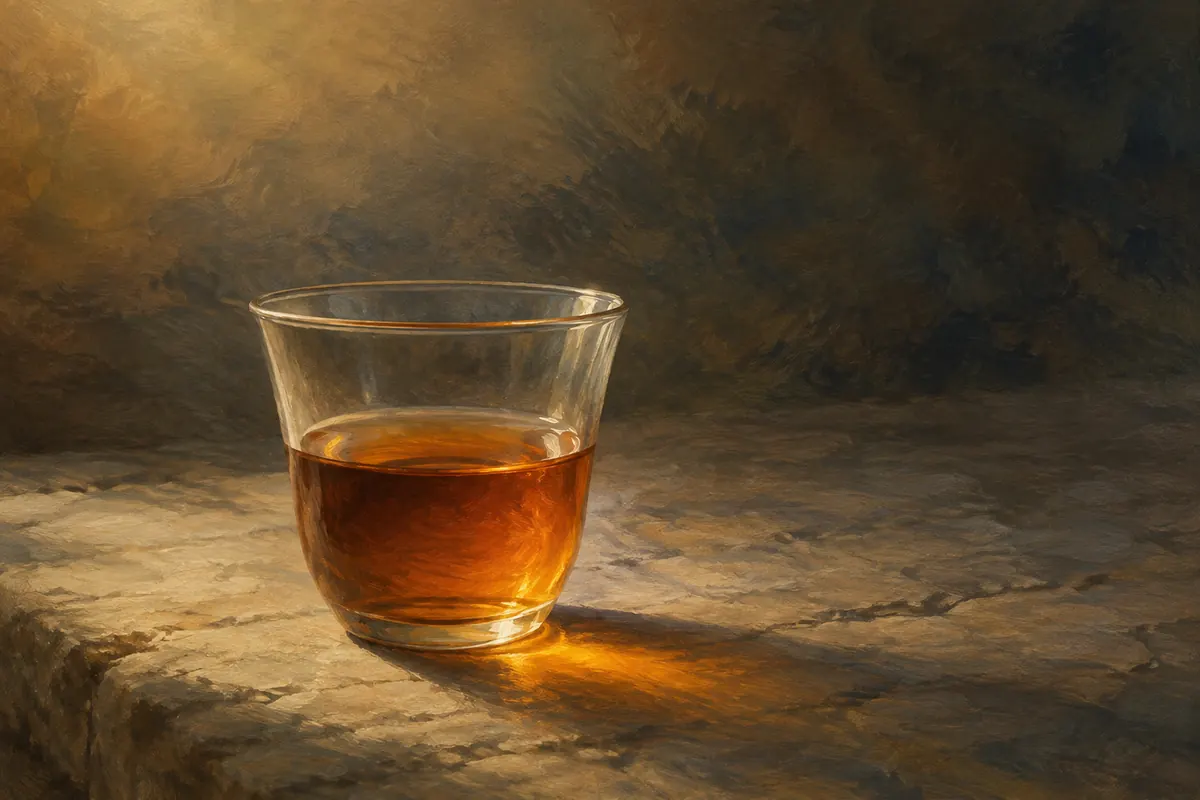
- Water: 95–100 °C / 205–212 °F.
- Leaf: 2.5 g per 200 ml.
- Time: 3–4 minutes for whole leaf; 2–3 for broken grades.
- Milk: low-grown and BOP grades take milk happily. High-grown Nuwara Eliya and a good Uva should be drunk plain — the aromatics are the point.
Ceylon is also the best black tea for iced tea, full stop. Its brightness and clean citrus edge survive chilling and dilution where a malty Assam turns flat and a Darjeeling disappears.
Frequently asked questions
Why is Sri Lankan tea called Ceylon tea?
Ceylon was the country's name under British rule. It was renamed Sri Lanka in 1972, but the tea industry kept the older name because "Ceylon tea" had become one of the world's most valuable trade marks. It is now protected as an origin designation, certified by the Sri Lanka Tea Board's Lion logo.
How did Sri Lanka become a tea-growing country?
Sri Lanka grew coffee until the fungal disease coffee leaf rust arrived in 1869 and destroyed the crop within about two decades. James Taylor had already planted nineteen acres of tea at Loolecondera estate in 1867; when coffee collapsed, planters converted to tea en masse.
What is the difference between high-grown and low-grown Ceylon tea?
High-grown Ceylon (above 1,200 m) is pale, bright, delicate and floral with lighter body. Low-grown Ceylon (below 600 m) is dark, heavy and malty with much more strength. Mid-grown sits between the two, offering rich colour and balanced body.
What makes Uva tea special?
From around June to September a hot dry wind called the Kachchan blows across Uva's slopes, stressing the tea bushes and slowing their growth. This produces a distinctive cooling, mentholic wintergreen note found nowhere else, during a short seasonal quality window.
What is the Mahaweli river's connection to Ceylon tea?
The Mahaweli is Sri Lanka's longest river and rises in the central highlands. Its upper catchment covers the wet, high, steeply folded country between Kandy, Hatton and Nuwara Eliya, where the island's finest high-grown tea is produced.
Which Ceylon tea is best for iced tea?
Ceylon in general is the best black tea for iced tea. Its bright, clean, citrusy character survives chilling and dilution, whereas malty Assam turns flat and delicate Darjeeling loses its aromatics. A mid-grown or high-grown BOP grade works particularly well.
